The Architecture of Autonomy: Building the Enterprise Nervous System

For many small and medium enterprises, automation has historically meant little more than getting a calendar to sync with customer relationship management software. However, 2025 marks a distinct shift toward the era of agentic artificial intelligence, a change that moves beyond simple workflow improvements and into the realm of intelligent orchestration. An autonomous agent is far more than a basic script; it is a system capable of perceiving its environment, reasoning through complex data, and executing tasks on its own. These systems are taking companies past simple productivity gains and enabling entirely new business models that rely on things like continuous risk monitoring or predictive analytics. Of course, embracing this level of capability brings a significant amount of new complexity, often described as a distributed tax, because deploying reliable AI workflows forces organizations to rethink security, identity, and governance from the ground up.

As companies begin to deploy these sophisticated agents—perhaps one tasked with reading market news, synthesizing intelligence, and sending alerts—they require a dedicated orchestration layer to manage the process. This infrastructure acts as an enterprise nervous system, connecting the AI model, which serves as the brain, with the various APIs and databases that act as the hands. One major hurdle here is that traditional per-task billing models for cloud automation can become prohibitively expensive as these workflows scale. This pricing structure essentially punishes success by raising fees as volume increases, which is why many organizations are turning to managed open-source automation engines. These platforms allow for complex logic and unlimited execution on self-hosted infrastructure, shifting the cost model to pay for compute resources rather than headcount or transaction volume.
Perhaps the most critical architectural challenge involves securing non-human identities, such as service accounts, bots, and agents, which can easily outnumber human users by a hundred to one. Every agent requires credentials like API keys or tokens to operate, and relying on static secrets introduces immense risk. If an attacker compromises a static key, they can impersonate the agent indefinitely, potentially subverting the organization's decision-making loops or allowing malware to propagate through the development supply chain. The industry solution is a move toward workload identity federation, where software containers are assigned verifiable, short-lived cryptographic identities. These credentials rotate automatically, rendering them useless quickly if stolen, and protocols like the Grant Negotiation and Authorization Protocol allow agents to negotiate access strictly for the specific task at hand.
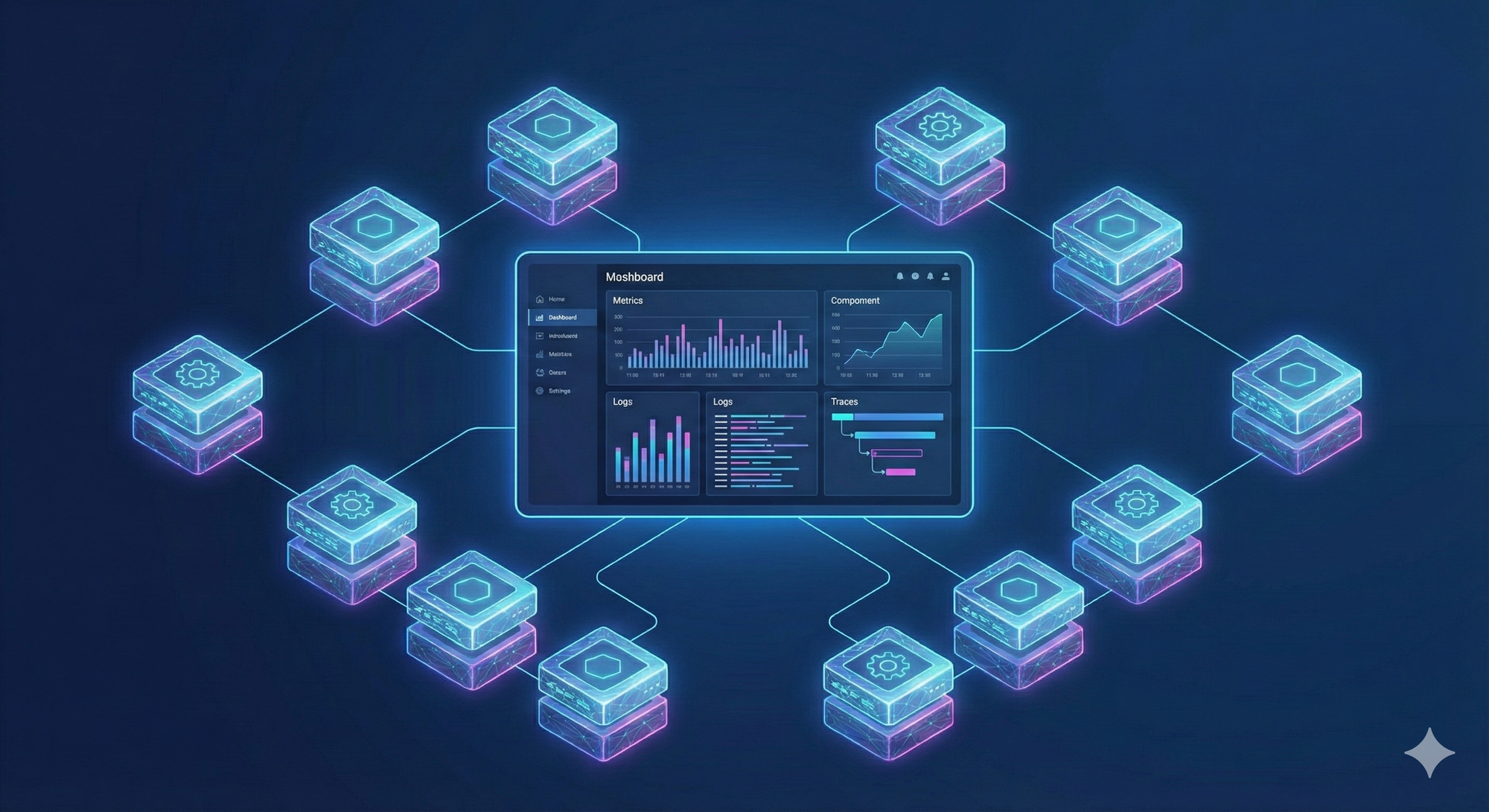
Adopting these distributed systems requires a commitment to operational discipline to avoid creating a distributed monolith—a system that is technically distributed but still tightly coupled and fragile. To achieve true resilience, architectural best practices suggest a modular design where microservices follow a single-responsibility principle, ensuring that updating one feature, such as payment processing, does not break unrelated functionality like order tracking. This approach also allows for independent scaling, meaning resources can be directed solely to components under pressure without having to scale the entire system. Furthermore, observability becomes non-negotiable; teams must adopt robust tools to track metrics, logs, and traces to debug issues that span multiple services. Finally, for high-stakes decisions, regulatory frameworks like the EU AI Act emphasize the necessity of human-in-the-loop checkpoints, ensuring that critical actions are reviewed by people. Ultimately, modern architecture is a strategic business decision rather than just a technical trend, focusing on adaptability and resilience to master the complexity required for autonomous growth.